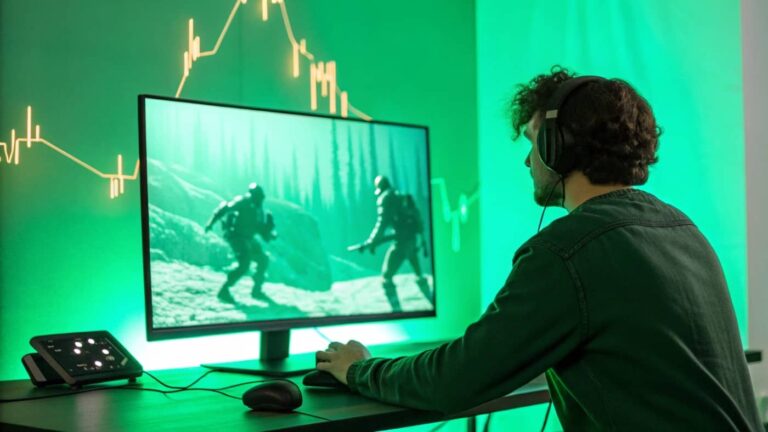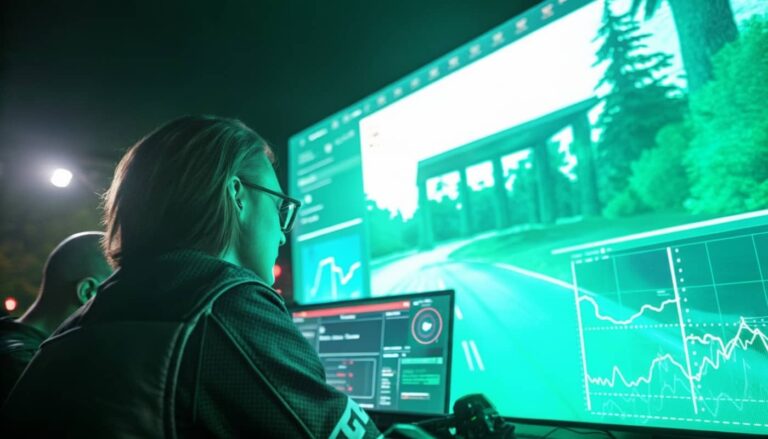
Competitive first-person shooters demand different optimization priorities than casual gaming. Every millisecond of input lag and every frame per second matters when split-second decisions determine match outcomes. Professional players routinely sacrifice visual quality entirely to maximize frame rates and minimize latency, often running games that look worse than titles from a decade ago. The goal isn’t creating screenshots worth sharing but achieving the smoothest, most responsive experience possible. Understanding how to configure graphics settings specifically for competitive advantage rather than visual appeal separates casual players from serious competitors. For those seeking comprehensive system improvements beyond just graphics configuration, optimizing every component from hardware drivers to background processes creates the foundation for peak competitive performance.
Understanding competitive FPS requirements
Competitive shooters like Counter-Strike 2, Valorant, Apex Legends, and Call of Duty prioritize responsiveness and clarity over graphical fidelity. The games themselves often feature relatively simple graphics compared to AAA single-player titles, but achieving competitive-level performance requires aggressive optimization.
Frame rate targets for competitive play far exceed casual gaming standards. While 60 FPS suffices for single-player experiences, competitive players target 200-300 FPS or higher. This isn’t about visual smoothness on 144Hz monitors but about reducing system latency. Higher frame rates mean more recent information displayed on screen and lower input lag between action and response.
Input latency encompasses the entire chain from peripheral input to pixel response. Even with 240Hz monitors, poor graphics settings can add 20-40ms of system latency. Professional players feel differences of 5-10ms, making every optimization count. Graphics settings that add processing time between frames directly increase this latency chain.
Visual clarity trumps visual fidelity in competitive contexts. Settings that add atmospheric effects, motion blur, or complex shadows often obscure enemies rather than enhance the experience. Competitive players disable features that casual gamers enable, prioritizing the ability to spot targets quickly over realistic lighting or particle effects.
Consistency matters more than peak performance. Maintaining stable 240 FPS provides better experience than fluctuating between 200 and 300 FPS. Frame time variance creates micro-stutters that disrupt aiming and tracking. Optimization focuses on eliminating performance dips during intense action when you need smoothness most.
CPU bottlenecks affect competitive games differently than GPU-bound titles. Most competitive shooters run at lower resolutions and reduced settings, shifting bottlenecks from GPU to CPU. High frame rate targets stress the CPU’s ability to process game logic and prepare draw calls. Understanding CPU versus GPU limitations guides optimization priorities.
Essential settings to disable immediately
Certain graphics settings provide zero competitive advantage while consuming valuable performance. Disabling these creates the foundation for competitive optimization.
Motion blur simulates camera exposure during movement, creating artificial smoothness at low frame rates. However, it obscures detail during fast movements exactly when you need visual clarity for tracking targets. Disable motion blur universally in all competitive shooters. The setting exists for cinematic appeal, not competitive performance.
Depth of field blurs distant or nearby objects to mimic camera focus. This photographic effect reduces visual information available to you while consuming GPU resources. Competitive games require seeing the entire screen clearly simultaneously. Disable depth of field to maximize awareness and reclaim performance.
Chromatic aberration simulates lens distortion by separating colors at screen edges. This serves no gameplay purpose and makes the image objectively worse from a clarity standpoint. Disable chromatic aberration in every competitive title without exception.
Film grain adds noise to mimic old film stock. This purely aesthetic effect reduces image clarity while providing no competitive benefit. Disable film grain to clean up the image and gain minor performance improvements.
Lens flare and bloom simulate light artifacts and glare. While minimal performance impact exists, these effects can obscure enemies positioned near bright objects like windows or explosions. Disable or minimize lens flare and bloom to prevent visual distractions during crucial moments.
Vignetting darkens screen edges to draw focus toward the center. This reduces usable screen space and peripheral awareness, both critical for competitive play. Disable vignetting to maximize your field of view and edge visibility.
Ambient occlusion adds subtle shadows in corners and crevices for depth perception. While relatively cheap performance-wise, it provides minimal competitive benefit. Disable ambient occlusion or set to lowest quality to reclaim every possible frame and reduce visual complexity.
Shadow optimization for competitive advantage
Shadows present a unique challenge in competitive gaming. They provide tactical information about enemy positions but also consume substantial performance and can create visual clutter.
Shadow quality dramatically impacts frame rates in most shooters. Ultra shadows can cost 20-30% performance compared to low settings. The visual difference between low and ultra shadows matters little for competitive play. Set shadows to low or medium maximum, prioritizing frame rate over shadow detail.
Shadow distance controls how far from your view shadows render. Reducing shadow distance improves performance significantly in outdoor maps with long sightlines. Most competitive engagements occur within 30-50 meters, making distant shadows irrelevant. Set shadow distance to minimum or low.
Dynamic shadows update in real-time as objects and lights move. Static or baked shadows pre-calculate lighting and cast no performance cost. Some games let you disable dynamic shadows while keeping static ones. This provides tactical shadow information without the performance penalty of real-time calculation.
Contact shadows add fine detail where objects meet surfaces. These micro-shadows serve no competitive purpose and cost 3-5% performance. Disable contact shadows entirely for maximum frame rates. The tactical information they provide is negligible compared to their performance cost.
Shadow resolution determines the sharpness of shadow edges. Low resolution creates blocky shadows while high resolution produces crisp edges. For competitive play, shadow clarity matters far less than maintaining high frame rates. Use minimum shadow resolution settings.
Disabling shadows entirely is an option in some competitive titles. Games like Counter-Strike allow completely disabling shadows for maximum performance. Test whether shadow removal helps or hurts your ability to gather tactical information. Some players find shadows essential for detecting enemy positions while others prefer the performance gain.
Anti-aliasing choices for competitive gaming
Anti-aliasing smooths jagged edges but adds processing time and can soften the overall image. Competitive players carefully balance edge smoothing with performance and clarity.
FXAA represents the fastest anti-aliasing method with only 1-2% performance cost. It works by blurring edges after rendering completes, which smooths jaggies but can make the entire image slightly softer. FXAA suits competitive gaming when you want minimal edge roughness without significant performance impact.
TAA or temporal anti-aliasing uses previous frame data to reconstruct smooth edges. Modern implementations provide excellent quality but can introduce ghosting during fast movements and make the image slightly blurry. The 5-10% performance cost and potential ghosting make TAA questionable for competitive scenarios.
Disabling anti-aliasing entirely is the most common choice among professional players. At 1080p and especially 1440p, pixel density reduces jagged edge visibility enough that anti-aliasing becomes unnecessary. The performance gain and maximum image sharpness outweigh minor edge roughness.
MSAA costs too much for competitive gaming, often reducing frame rates by 30-50% at 4x settings. The technique is incompatible with deferred rendering used in many modern games. Avoid MSAA in competitive titles regardless of how powerful your GPU is.
Resolution considerations affect anti-aliasing decisions. At 1080p, minimal anti-aliasing or FXAA provides adequate smoothing. At 1440p and 4K, native pixel density eliminates the need for anti-aliasing entirely. Higher resolutions let you disable anti-aliasing without noticeable jaggedness.
Upscaling interaction with anti-aliasing requires attention. Technologies like NVIDIA DLSS and AMD FSR include their own anti-aliasing as part of the reconstruction process. When using upscaling, disable separate anti-aliasing to avoid overly soft images from double processing.
Texture and effects optimization
Texture quality and visual effects settings impact both performance and competitive clarity differently than other graphics options.
Texture quality primarily affects VRAM usage rather than frame rate. High resolution textures consume more video memory but don’t significantly impact rendering speed until you exceed VRAM capacity. Use high or ultra textures if you have 8GB or more VRAM, as they don’t hurt performance while providing clearer surface details for identifying materials and objects.
Texture filtering or anisotropic filtering smooths textures viewed at angles. The performance cost of 16x anisotropic filtering is negligible on modern GPUs, typically 1-2% frame rate reduction. Enable maximum texture filtering for clearer ground textures and surfaces without meaningful performance penalty.
Particle effects control explosions, smoke, muzzle flashes, and environmental details. High particle counts can obscure visibility during firefights when you most need to see enemies. Set particle quality to low or medium to maintain visual feedback without overwhelming visual clutter during intense action.
Particle lighting determines whether particles cast shadows or reflect lighting. This effect adds realism but costs performance and increases visual complexity. Disable particle lighting entirely to reduce both performance overhead and visual distractions from lit smoke and explosion effects.
Post-processing quality controls various image polishing effects. Lower post-processing settings disable or reduce effects like bloom, lens flare, and color grading adjustments. Set post-processing to low to minimize visual artifacts that don’t contribute to competitive awareness.
Environmental detail controls decorative elements like grass, debris, and small objects. While these add atmosphere, they can obscure prone enemies or create visual noise. Reduce environmental detail to low or medium to clean up the visual field and improve enemy visibility.
Resolution and upscaling strategies
Resolution directly impacts both performance and competitive visibility, requiring careful balancing for optimal results.
Native resolution provides the sharpest image but demands the most GPU power. Competitive players often reduce resolution from 1440p to 1080p or even lower to maximize frame rates. The clarity reduction is noticeable but acceptable when the frame rate gain reaches 40-60% improvement.
Resolution scaling or render resolution lets you render at lower resolution while maintaining UI sharpness at native resolution. Setting render resolution to 80-90% of native provides 15-25% better performance while remaining visually acceptable. This compromise maintains readable UI elements while improving frame rates.
DLSS from NVIDIA uses AI to reconstruct higher resolution images from lower resolution rendering. DLSS performance mode can provide 70-90% better frame rates in demanding titles while maintaining acceptable image quality. For competitive gaming, DLSS performance or ultra performance modes prioritize frame rate over image quality.
FSR from AMD works across broader hardware and offers similar upscaling benefits. FSR performance mode delivers substantial frame rate improvements with image quality degradation that’s acceptable for competitive play. The technology works on both AMD and NVIDIA GPUs, making it accessible when DLSS isn’t available.
Ultra-low resolutions like 1024×768 or even 800×600 are occasionally used by professional players in games like Counter-Strike. These resolutions maximize frame rates on any hardware and create a stretched appearance that some players prefer. Test whether ultra-low resolutions help your performance or hinder target acquisition.
Aspect ratio considerations affect field of view and target sizing. Some competitive games on older engines allow stretched resolutions that make character models appear wider and potentially easier to hit. Modern games typically maintain aspect ratio, making this less relevant, but understanding your game’s behavior helps optimize resolution choices.
Monitor settings integration
Graphics settings must work in harmony with monitor configuration to achieve optimal competitive performance.
Refresh rate determines how many frames per second your monitor can display. Competitive gaming monitors offer 144Hz, 240Hz, or even 360Hz refresh rates. Configure games to run at frame rates exceeding your monitor’s refresh rate to minimize input lag even though you can’t see frames beyond the refresh rate.
Overdrive settings on monitors push pixels to change faster, reducing ghosting during motion. However, excessive overdrive causes inverse ghosting or overshoot artifacts. Test your monitor’s overdrive modes to find the setting that provides clear motion without introducing artifacts that affect target tracking.
Variable refresh rate through G-Sync or FreeSync eliminates screen tearing within the monitor’s supported range. However, some implementations add minor latency. Many professional players disable adaptive sync when running frame rates consistently above 240 FPS, accepting minor tearing to minimize any potential input lag.
Black frame insertion and backlight strobing reduce motion blur by inserting black frames or strobing the backlight between actual frames. This dramatically improves motion clarity for tracking moving targets. However, it reduces brightness significantly and may increase perceived input lag despite not adding actual latency.
Input lag specifications vary between monitors even at the same refresh rate. Gaming monitors typically achieve 1-5ms input lag while general-purpose displays add 15-40ms. Research actual measured input lag from professional reviews rather than relying on manufacturer specifications which often exclude processing time.
Game-specific competitive optimizations
Different competitive shooters require tailored optimization approaches based on their engines and competitive scenes.
Counter-Strike 2 optimization focuses on maximum frame rate and visibility. Disable shadows entirely or set to minimum. Use low or minimum settings across the board except texture quality. The game runs on Source 2 engine which scales well, making 300+ FPS achievable on mid-range hardware with proper settings.
Valorant optimization is straightforward due to the game’s low system requirements. The game is designed to run well on modest hardware. Still, competitive players use low settings universally and disable all visual effects. Valorant’s 128-tick servers make high frame rates particularly valuable for accurate hit registration.
Apex Legends requires balancing visibility with performance in a more demanding engine. Set texture streaming budget appropriately for your VRAM. Disable dynamic spot shadows and set model detail to low. The game’s fast movement makes high frame rates critical, targeting 190+ FPS for 144Hz monitors.
Call of Duty Warzone demands more GPU power than traditional competitive shooters. Use DLSS performance mode on NVIDIA cards. Disable ray tracing entirely. Set texture quality to normal or high but reduce shadows, effects, and particle quality to low. The large map requires optimization focused on consistent performance.
Rainbow Six Siege benefits from specific settings that enhance visibility through soft walls and barricades. Disable ambient occlusion and lens effects. Set shading quality to medium for adequate visibility through destruction while maintaining performance. The game’s tactical nature makes 144 FPS sufficient unlike twitch shooters requiring 240+ FPS.
CPU optimization for high frame rates
Competitive gaming’s high frame rate targets stress CPUs more than typical gaming, making CPU optimization critical.
Background process elimination becomes essential when targeting 240+ FPS. Close all unnecessary applications before launching competitive games. Browsers, Discord, and streaming software consume CPU cycles that could process game logic and prepare draw calls for the GPU.
Process priority adjustment through task manager allocates more CPU time to your game. Right-click the game process, select set priority, and choose high or above normal. This ensures Windows favors the game during resource contention, though modern Windows schedulers handle this reasonably well automatically.
Game mode in Windows 10 and 11 optimizes CPU scheduling for gaming. Enable it through settings under gaming menu. While the impact is modest on high-end systems, it prevents background tasks and Windows updates from interfering during gameplay.
Power plan configuration prevents CPU throttling during light loads. Switch from balanced to high performance through control panel power options. This keeps CPU cores at maximum frequency rather than ramping up reactively, reducing latency spikes when action intensifies.
Core affinity settings can help on older systems or specific games with poor multi-threading. Assigning the game to specific CPU cores while restricting background processes to others prevents thread migration overhead. However, modern games and operating systems handle this intelligently, making manual affinity tweaking rarely beneficial.
Monitoring competitive performance
Tracking performance metrics helps verify optimizations actually improve competitive experience rather than just changing numbers.
Frame time consistency matters more than average FPS. Consistent 240 FPS feels better than fluctuating between 220 and 280 FPS despite identical averages. Monitor frame time graphs with tools like MSI Afterburner to identify stuttering that average FPS measurements miss.
Latency measurement tools quantify system responsiveness. NVIDIA’s Reflex Analyzer provides hardware-based end-to-end latency measurement. For software alternatives, games with Reflex support display system latency metrics in-game. Target under 20ms total system latency for optimal competitive responsiveness.
Performance overlays display real-time statistics without impacting gameplay. Configure minimal overlays showing FPS, frame time, and potentially CPU/GPU usage. Avoid cluttering the screen with excessive monitoring data that distracts from gameplay while providing minimal actionable information.
Benchmarking versus actual gameplay reveals different performance profiles. Built-in benchmarks don’t always stress systems identically to competitive matches. Test settings changes during actual games or practice sessions rather than relying solely on benchmark results.
Competitive FPS optimization prioritizes frame rate and responsiveness over visual quality without compromise. Disable all effects that don’t contribute to gameplay clarity including motion blur, depth of field, and excessive shadows. Set most graphics options to low or minimum, making exceptions only for settings like texture quality that don’t impact performance significantly.
Target frame rates of 200-300 FPS even on 144Hz monitors for minimum system latency. Higher frame rates reduce input lag regardless of monitor refresh rate, providing competitive advantages worth the visual sacrifices. Use upscaling technologies like DLSS or FSR performance modes to achieve these targets without requiring top-tier hardware.
Monitor-specific optimizations including proper overdrive configuration and potentially disabling adaptive sync above 240 FPS further reduce latency. Every millisecond matters in competitive scenarios where opponent reactions operate on the same timescale as your system’s input lag.
Test settings changes systematically during actual gameplay rather than relying on benchmarks or theoretical knowledge. What works for professional players may not suit your specific hardware, games, or preferences. Find the balance that maintains competitive performance while remaining visually acceptable for your standards.
Regular optimization maintenance keeps competitive systems performing optimally. Game patches sometimes reset settings or introduce new features defaulted to enabled. Driver updates can improve performance but occasionally introduce issues. Verify your optimized configuration remains active after updates to maintain peak competitive performance.