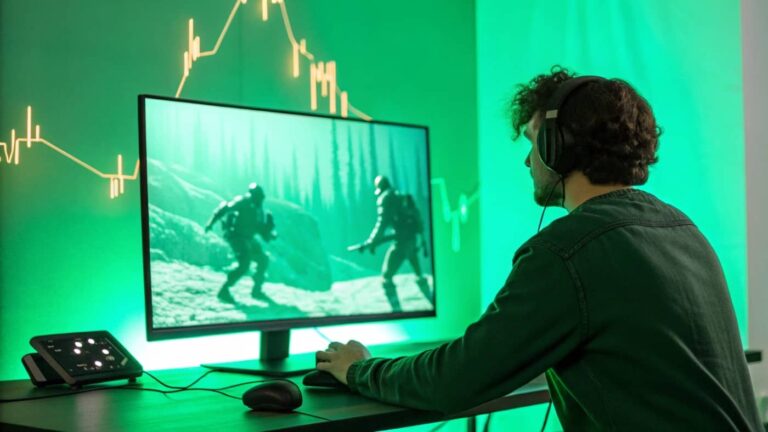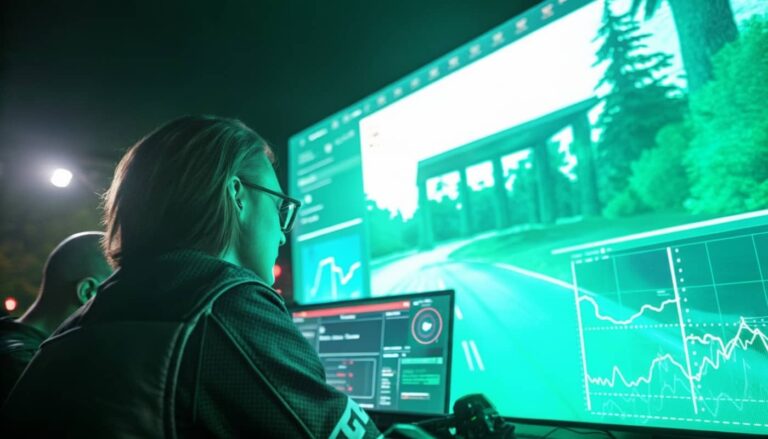
Input lag is the invisible enemy of competitive gaming. It’s the delay between pressing a button and seeing the result on screen, and even 10-20 milliseconds can mean the difference between victory and defeat. Unlike frame rate drops that you can see, input lag operates silently, making you feel like you’re always one step behind. The causes range from display settings to mouse polling rates to Windows configurations. Addressing input lag requires a systematic approach that considers every link in the chain from peripheral to display. Combined with proper system setup, these optimizations will make your gaming feel more immediate and responsive.
Understanding input lag and system latency
Input lag represents the total time between pressing a button and seeing the corresponding action on screen. This journey involves multiple stages, each adding latency. Your peripheral processes the input, sends it to your PC, Windows handles the input event, the game processes it, the GPU renders the frame, and finally your monitor displays it. Each step contributes to total system latency.
System latency differs from input lag in technical definitions but practically means the same thing for gamers. NVIDIA calls it “system latency” while most gamers use “input lag.” Both measure the time from physical input to visual output. Modern gaming systems typically have 40-80ms total latency, while optimized competitive setups achieve 15-30ms.
Peripheral latency starts the chain. Wireless mice and keyboards add 1-10ms depending on their technology. Budget wired peripherals can add 5-15ms due to slow polling rates and processing. Premium gaming peripherals minimize this to under 1ms through high polling rates and optimized firmware. Your choice of peripherals sets the baseline for all subsequent optimizations.
Processing latency occurs as Windows and your game handle inputs. The game engine must process your input, update game state, calculate physics and AI, and issue draw calls to the GPU. Complex game engines with multiple processing stages add more latency than simpler ones. You have limited control here, but system optimization reduces this component.
Rendering latency happens as your GPU processes draw calls and renders frames. The GPU queue determines how many frames ahead the GPU prepares. A deeper queue improves frame rate consistency but increases latency. A shallow queue reduces latency but may cause stuttering if the GPU runs out of work. Balancing this tradeoff optimizes responsiveness.
Display latency represents the final stage. Your monitor receives the signal and processes it through its internal electronics before activating pixels. Panel technology, overdrive settings, and signal processing all affect display latency. Gaming monitors minimize this to 1-5ms while general-purpose displays often add 15-40ms.
Frame rate relationship to input lag is significant. Higher frame rates reduce input lag even on 60Hz monitors because they reduce the time between input sampling and frame display. Running at 240 FPS on a 60Hz monitor still provides lower latency than 60 FPS, though you won’t see the extra smoothness. This is why competitive players maximize frame rates regardless of monitor refresh rate.
Monitor settings and display optimization
Your monitor contributes substantially to total input lag. Proper configuration and the right features dramatically reduce display-induced latency.
Gaming mode on monitors disables image processing that adds latency. Features like dynamic contrast, noise reduction, and advanced color processing can add 10-30ms of delay. Gaming mode bypasses these processors for the most direct signal path. Access this through your monitor’s on-screen display menu. The visual difference is minimal while the responsiveness improvement is immediately noticeable.
Response time specifications measure how quickly pixels change color, not input lag. A 1ms response time doesn’t mean 1ms input lag. Response time affects motion clarity and ghosting rather than latency. However, fast response times correlate with low-latency designs. Monitors marketed for gaming typically optimize both.
Overdrive settings push pixels to change faster, reducing ghosting during motion. However, excessive overdrive causes inverse ghosting or overshoot artifacts. Most gaming monitors offer multiple overdrive levels. Test each setting to find the balance between motion clarity and artifact reduction. The fastest setting isn’t always best.
Refresh rate directly impacts how quickly your actions appear on screen. A 60Hz monitor updates every 16.7ms while a 144Hz monitor updates every 6.9ms. This difference alone reduces input lag by nearly 10ms. Higher refresh rates provide diminishing returns, with 240Hz offering 4.2ms updates and 360Hz achieving 2.8ms. For competitive gaming, 144Hz represents the sweet spot of cost versus benefit.
Variable refresh rate technologies like G-Sync and FreeSync eliminate tearing without VSync’s input lag penalty. However, some implementations add minor latency compared to fixed refresh rate operation. Test with adaptive sync both enabled and disabled above your monitor’s maximum refresh rate. Many competitive players disable it when running 200+ FPS for absolute minimum latency.
Display connection type matters for bandwidth and processing. DisplayPort 1.4 and newer provides the bandwidth needed for high refresh rates at high resolutions. HDMI 2.0 supports 1080p 240Hz or 1440p 144Hz but lacks bandwidth for higher combinations. HDMI 2.1 supports up to 4K 144Hz. Use the newest standards your hardware supports and ensure cables are properly rated.
Black frame insertion and strobing reduce motion blur by inserting black frames between actual game frames. This improves motion clarity dramatically but reduces brightness and can increase perceived input lag despite not actually adding latency. Some players prefer the clearer motion while others find the reduced brightness distracting.
Monitor input lag specifications from professional reviews provide real-world measurements. Manufacturers rarely publish true input lag numbers. Sites like RTings and TFTCentral measure actual latency with specialized equipment. Research your monitor or potential purchases through these reviews to understand real performance.
Peripheral optimization
Gaming peripherals represent the first link in the input chain. Optimizing mice, keyboards, and controllers minimizes latency before signals even reach your PC.
Mouse polling rate determines how frequently your mouse reports position to your PC. Standard mice use 125Hz, reporting every 8ms. Gaming mice offer 500Hz (2ms) or 1000Hz (1ms) polling. Set your mouse to maximum polling rate through its software. The difference between 125Hz and 1000Hz is immediately noticeable in fast-paced games.
Wired versus wireless connections significantly affected latency in older peripherals. Modern wireless gaming mice from reputable manufacturers achieve latency matching or even beating wired connections. Logitech Lightspeed, Razer HyperSpeed, and similar technologies deliver sub-1ms wireless latency. However, budget wireless mice still add considerable lag. When in doubt, use wired peripherals.
DPI and sensitivity settings don’t directly affect latency but influence how quickly you can react. Optimal DPI balances precision with speed. Most professional players use 400-1600 DPI with low in-game sensitivity for precise aiming. Higher DPI reduces pixel skipping on high-resolution monitors. Test different combinations to find what feels most responsive for your playstyle.
USB port selection matters more than most realize. Use USB 3.0 or higher ports connected directly to the motherboard rather than front panel connectors or USB hubs. Some motherboards feature dedicated gaming USB ports with optimized controllers and less jitter. Consult your motherboard manual to identify the best ports for peripherals.
Keyboard switch type affects both tactile feel and latency. Mechanical switches typically register faster than membrane keyboards. However, the difference is only 2-5ms in most cases. More important is the actuation point. Switches with shorter actuation distances like Cherry MX Speed or optical switches register inputs faster, though this requires adjustment to avoid accidental presses.
Controller input lag varies dramatically between platforms and connection methods. PlayStation and Xbox controllers connected via USB offer the lowest latency on PC. Bluetooth adds 5-15ms depending on the adapter and driver implementation. For competitive games supporting controllers, wired connections are essential.
RGB lighting on peripherals consumes processing power that could handle inputs. While the effect is minimal on quality gaming peripherals, some budget devices prioritize lighting over performance. Check if your peripheral offers performance modes that disable or reduce lighting effects for lower latency.
Firmware updates for peripherals occasionally improve latency and responsiveness. Manufacturers optimize input processing in firmware releases. Keep your gaming peripherals updated through their respective software suites. This is particularly important for wireless devices where protocol improvements can significantly reduce lag.
Graphics settings for lower latency
In-game graphics settings affect input lag through their impact on frame rendering pipeline and GPU queue depth.
VSync is the primary input lag culprit in graphics settings. Traditional VSync forces the GPU to wait for the monitor’s refresh before displaying frames, adding 1-2 frames of latency. At 60 FPS, this adds 16-33ms of delay. Disable VSync in all competitive games. The minor screen tearing is preferable to the massive latency penalty.
Maximum pre-rendered frames controls how many frames the CPU prepares ahead of GPU rendering. Higher values improve frame rate smoothness but increase latency. Lower values reduce lag but can cause stuttering if the GPU runs out of work. Set this to 1 in NVIDIA Control Panel under Manage 3D Settings > Low Latency Mode > Ultra, or in AMD settings under Radeon Anti-Lag.
Triple buffering adds an extra frame buffer compared to double buffering, increasing GPU memory usage and latency. With VSync disabled, buffering mode becomes irrelevant. When forced to use VSync, double buffering provides lower latency than triple buffering despite potential frame rate drops when performance dips below refresh rate.
Frame rate caps prevent excessive rendering that wastes power and generates heat without improving responsiveness on fixed refresh rate monitors. However, higher frame rates do reduce latency even above monitor refresh rate. For competitive play, cap frame rates at 2-3x your monitor’s refresh rate. This balances reduced latency with reasonable power consumption.
Resolution and graphics quality settings indirectly affect input lag through their frame rate impact. Lower settings that achieve higher frame rates inherently reduce latency. Each additional frame means less time between input and display. Competitive players sacrifice visual quality for maximum frame rates specifically because of the latency benefits.
Upscaling technologies like DLSS and FSR improve frame rates, which reduces input lag. DLSS 3.5 and FSR 3 include frame generation features that can add latency despite increasing frame rate. For competitive gaming, use Quality or Balanced upscaling modes without frame generation. The performance improvement reduces system latency more than enough to offset any minor increase from the upscaling process.
Post-processing effects sometimes add latency beyond their frame rate impact. Motion blur in particular can mask the smoothness that makes low latency feel responsive. Depth of field and chromatic aberration serve no competitive purpose. Disable all post-processing effects both for frame rate and to avoid any processing-induced delays.
NVIDIA reflex and AMD anti-lag
Modern GPU manufacturers provide technologies specifically designed to reduce system latency beyond traditional optimizations.
NVIDIA Reflex optimizes the rendering pipeline to minimize latency in supported games. It works by synchronizing the CPU and GPU more efficiently, reducing the queue of frames waiting to be rendered. Reflex can reduce latency by 20-40ms in GPU-bound scenarios. Enable it through in-game settings on supported titles. The feature requires RTX 20-series or newer GPUs but also works on GTX 900 and 10-series cards with reduced effectiveness.
Reflex modes offer different latency profiles. On mode provides latency reduction with minimal performance impact. Boost mode increases GPU clock speeds slightly for additional latency reduction at the cost of higher power consumption. For competitive gaming, Boost mode delivers the lowest possible latency. The power consumption increase is modest, typically 10-20 watts.
Reflex Analyzer hardware from NVIDIA partners measures actual end-to-end system latency using a sensor attached to your mouse and monitor. This provides objective measurements of optimizations’ effectiveness. While not necessary for most users, competitive players benefit from quantifying latency improvements with real data.
AMD Anti-Lag reduces the render queue similar to Reflex but works across more games. It doesn’t require game-specific support, instead working at the driver level. Enable Anti-Lag through AMD Software under Gaming > Graphics > AMD Radeon Anti-Lag. The technology works on RX 5000-series and newer GPUs, providing 10-25ms latency reduction.
Anti-Lag+ represents AMD’s enhanced version with deeper game integration. Available in supported titles, it provides latency reduction comparable to NVIDIA Reflex. However, Anti-Lag+ temporarily caused issues with anti-cheat systems in 2023, leading AMD to pause the feature. Check current compatibility before enabling it in competitive games.
Combining latency reduction technologies with other optimizations compounds benefits. Reflex or Anti-Lag work best when paired with high frame rates, low-latency peripherals, and optimized display settings. The technologies complement rather than replace other optimizations in your latency reduction strategy.
Frame rate interaction with these technologies is important to understand. Reflex and Anti-Lag provide the most benefit when you’re GPU-limited, as they optimize how the GPU handles frames. When CPU-limited, their impact diminishes. Monitor your bottleneck to understand how much these technologies will help your specific system.
Windows and system configuration
Operating system settings significantly impact input lag through how Windows handles inputs and manages hardware.
Hardware-accelerated GPU scheduling reduces CPU overhead in managing GPU memory, lowering latency by 1-3ms. Enable it through Settings > Display > Graphics > Hardware-accelerated GPU scheduling. This feature requires Windows 10 version 2004 or newer and a compatible GPU. The latency reduction is modest but free.
Game Mode in Windows prioritizes gaming processes and prevents background tasks from interfering. Enable it through Settings > Gaming > Game Mode. While primarily focused on frame rate consistency, it also reduces input processing latency by giving games higher priority for input event handling.
Windows mouse settings introduce acceleration and smoothing that interfere with direct input. Disable “Enhance pointer precision” in Mouse Settings under Additional mouse options > Pointer Options. This removes Windows’ mouse acceleration, providing 1:1 input translation. Set pointer speed to the middle position (6/11) to avoid scaling.
Fullscreen exclusive mode bypasses Windows Desktop Window Manager, reducing latency by 5-15ms compared to borderless windowed or windowed modes. Force fullscreen through in-game settings. If games don’t offer true fullscreen, disable fullscreen optimizations by right-clicking the game .exe, selecting Properties > Compatibility, and checking “Disable fullscreen optimizations.”
USB polling fixes in Windows reduce input jitter and improve consistency. Some systems experience USB polling issues that create irregular input timing. Update motherboard chipset drivers from the manufacturer’s website. If issues persist, try different USB ports or install USB driver updates specifically targeting polling stability.
Process priority for games ensures Windows allocates CPU time preferentially to gaming processes. Right-click your game in Task Manager, select Set Priority, and choose High or Above Normal. This reduces the chance of background processes stealing CPU cycles needed for input handling. Avoid Realtime priority as it can cause system instability.
Background process management indirectly affects input lag by freeing CPU resources for input processing. Close browsers, chat applications, and unnecessary services before gaming. Every background process that shares CPU time with your game potentially adds microstutters that manifest as perceived input lag.
Power plan configuration affects CPU boost behavior and response times. The default Balanced plan can throttle CPU during light loads, adding milliseconds to input processing. Switch to High Performance through Control Panel > Power Options. AMD Ryzen users benefit from the Ryzen High Performance plan included with chipset drivers.
Network latency for online gaming
Online multiplayer introduces network latency on top of system input lag. Optimizing your connection reduces the delay between your actions and server confirmation.
Ping measures round-trip time to game servers. Lower ping means faster server response to your inputs. Target ping under 30ms for competitive play. Use server browsers or matchmaking options to connect to geographically close servers. A 20ms difference in ping is more noticeable than a 20ms improvement in system input lag.
Wired versus wireless networking dramatically affects latency stability. Wi-Fi adds 5-30ms of latency depending on signal strength and interference. More importantly, Wi-Fi introduces jitter where latency varies frame by frame. Ethernet connections provide consistent, low latency. For competitive gaming, wired connections are non-negotiable.
Quality of Service settings on routers prioritize gaming traffic over other household internet usage. Configure QoS to give your gaming PC and console top priority. This prevents downloads, streaming, or other devices from competing for bandwidth and increasing your ping during crucial moments.
DNS resolution speed affects initial connections and server browser responsiveness. Use fast DNS servers like Cloudflare (1.1.1.1), Google (8.8.8.8), or your ISP’s recommended DNS. The difference in ongoing gameplay is negligible, but faster DNS improves matchmaking and connection establishment speeds.
Bufferbloat occurs when network equipment queues too many packets, increasing latency during high traffic. Test for bufferbloat at sites like Waveform’s bufferbloat test. If your connection shows high bufferbloat, enable QoS features or consider upgrading to a router with better buffer management.
Network driver optimization ensures efficient packet handling. Update network adapter drivers from your motherboard manufacturer’s website rather than relying on Windows Update. Some manufacturers offer gaming-optimized drivers that prioritize latency over throughput.
Measuring and verifying improvements
Objective measurement confirms whether optimizations actually reduce input lag or merely create placebo effects.
Latency testing tools provide quantitative measurements. NVIDIA’s LDAT system offers professional-grade measurement using specialized hardware. For home testing, the Blur Busters Mouse Click Latency Test provides browser-based latency estimation. While less precise than hardware solutions, it identifies major latency issues.
Subjective testing through gameplay often reveals latency changes more clearly than tools. After making optimizations, play your main game for 30 minutes to acclimate to the new responsiveness. Reverting a change will make increased latency immediately apparent if the optimization was effective.
Frame time analysis with tools like FrameView or PresentMon reveals rendering consistency that affects perceived input lag. Inconsistent frame times create uneven input response even when average latency is low. Optimizations should improve both average latency and frame time consistency.
Comparison testing requires systematic methodology. Change one variable at a time and test thoroughly before making additional changes. This identifies which specific optimizations provide real benefits versus placebo effects. Document your baseline and each change for future reference.
High-speed camera recording can measure display latency. Record your screen and peripheral simultaneously at 240 FPS or higher. Count frames between button press and on-screen response. This provides accurate measurements without specialized equipment, though the process is tedious.
Input lag reduction requires optimizing every component in the input-to-display chain. Start with monitor settings and ensure gaming mode is enabled with appropriate overdrive settings. Verify your peripherals use maximum polling rates and connect through optimal USB ports. Configure graphics settings to disable VSync and enable Reflex or Anti-Lag in supported games.
System-level optimizations through Windows configuration and background process management eliminate software bottlenecks. Network optimization becomes critical for online competitive gaming where server latency compounds system input lag. Each optimization contributes small improvements that compound into significantly more responsive gameplay.
High frame rates provide some of the most substantial latency reductions. Even optimizations that don’t directly reduce latency often improve frame rates, which indirectly reduces lag. Prioritize settings changes and hardware upgrades that maximize sustained frame rates in your primary games.
Not every optimization benefits every system equally. Test changes systematically and measure results through both objective tools and subjective feel. Your specific hardware configuration, game preferences, and sensitivity to latency determine which optimizations provide the most benefit.
Competitive gaming benefits most from aggressive latency reduction. Casual players may not notice differences under 20ms while professional gamers feel every millisecond. Tailor your optimization efforts to your competitive level and the genres you play. Fast-paced shooters and fighting games demand lower latency than strategy games or RPGs.
Regular maintenance preserves optimized input lag. Driver updates, Windows patches, and game updates can reset settings or introduce new latency. Periodically verify your optimizations remain active and effective. The responsive feel of a properly optimized system makes the effort worthwhile for any serious gamer.