Your Once Human PC settings could be the only thing standing between you and smooth buttery gameplay. Most players blame their hardware but the real culprit is almost always a few wrong settings. This guide breaks down 7 proven tweaks that can transform your performance instantly whether you are running a budget build or a high-end rig. And the best part? Once Human is completely free to play on PC so if you have not yet downloaded Once Human on PC there is zero reason not to jump in and test every single one of these optimizations yourself right now.


Once Human PC performance overview: what to expect
Why Once Human is demanding on PC hardware
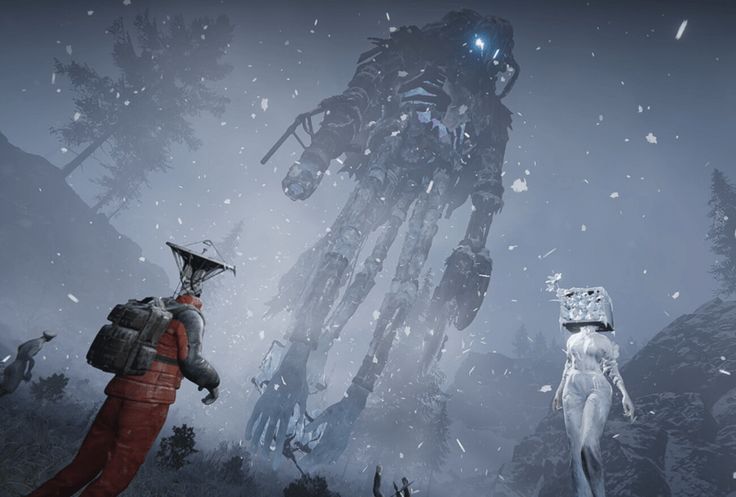
Once Human is not your average survival game. It throws you into a massive open world filled with mutated creatures, dynamic weather, base building, and intense third-person combat all at the same time. That combination puts serious pressure on your CPU, GPU, and RAM simultaneously. Unlike simpler games where only one component gets stressed, Once Human spreads the load across your entire system.
The game uses Unreal Engine, which is known for being visually rich but also heavy on resources especially when you are exploring large open areas or fighting multiple enemies at once. If your PC is not properly configured, you will feel it immediately through stuttering, frame drops, or long loading times.
The way Once Human handles its open world means your GPU is constantly rendering distant objects while your CPU manages AI, physics, and network data at the same time. That is a lot to handle without the right settings.

How PC settings impact your gameplay experience
Your in-game settings are basically a control panel for how hard your PC has to work. Turn everything up to ultra and your GPU will be sweating. Drop a few key settings down and suddenly you can gain 30 to 50 extra frames per second without the game looking much different.
The goal here is not to make the game look ugly. The goal is to find that sweet spot where Once Human looks great and plays smoothly. That is exactly what these 7 tweaks are designed to help you do.
Tweak 1: adjust graphics quality for smoother frames
Low vs medium vs ultra: which graphics preset should you use?
When you first open the graphics settings in Once Human, you will see presets like low, medium, high, and ultra. Most players either go straight to ultra because they want it to look good or drop everything to low because they want max FPS. Both of those are mistakes if you are not doing it strategically.
Ultra looks stunning but cuts your frame rate almost in half compared to medium. Low gives you the best performance but makes the game look flat and washed out. Medium is the real hidden gem here. It keeps most of the visual quality intact while giving your GPU a much more manageable workload.

| Preset | Estimated FPS boost vs ultra | Visual quality drop | Best for |
|---|---|---|---|
| Ultra | Baseline | None | RTX 4070+ / RX 7900 |
| High | +15–20% | Minimal | RTX 3060 Ti / RX 6700 XT |
| Medium | +35–50% | Moderate | GTX 1070 / RX 5600 XT |
| Low | +60–80% | Significant | GTX 1060 / integrated graphics |
Best graphics quality setting by GPU tier (GTX, RTX, AMD)
If you are on an older GTX card like a 1060 or 1070 stick to medium or low. These cards do not have enough VRAM to handle high textures and complex shadows comfortably. RTX 30 series cards like the 3060 or 3070 can comfortably run high settings with some tweaks. If you are lucky enough to have an RTX 40 series or an RX 7000 series card then go ahead and push ultra with DLSS or FSR enabled for extra smoothness.
Tweak 2: optimize resolution and render scale in Once Human
What is render scale and why it matters for FPS
Render scale is one of those settings that most players scroll past without thinking about it. That is a big mistake. Render scale controls how many pixels the game actually renders before displaying them on your screen. At 100% the game renders every pixel at full resolution. At 75% it renders less and then upscales the image to fit your monitor.
Think of it like a photograph. At full resolution every detail is sharp. At 75% it is slightly softer but your GPU does a lot less work and you gain significant frame rate in return. In a game like Once Human where you are constantly moving through busy environments this tradeoff is almost always worth it.
Best resolution settings for 1080p, 1440p, and 4K
For 1080p players keep your render scale at 100% and use DLSS or FSR to compensate if needed. For 1440p you can drop render scale to 85% and pair it with quality mode DLSS for a clean image with better performance. For 4K players dropping to 75% render scale with DLSS performance mode makes a massive difference without a noticeable quality loss at that screen size.
Tweak 3: configure shadow and lighting settings
How shadow distance tanks your FPS in open world zones
Shadows are one of the biggest performance killers in any open world game and Once Human is no exception. When you are standing in a dense forest or a ruined city the game is calculating shadows for every tree, building, and object around you. Crank the shadow distance up and your GPU starts working overtime just to calculate shadows you can barely even notice.
Reducing shadow distance from ultra to medium can recover up to 15 FPS in open world areas without making the game look noticeably worse during normal gameplay.
Recommended shadow settings for mid-range and budget PCs
Set shadow quality to medium and shadow distance to medium or low. This combination frees up a surprising amount of GPU power especially during intense combat sequences where multiple enemies and explosions are all casting shadows at the same time. You will not miss the extra shadow detail when you are focused on surviving.
Tweak 4: fine-tune anti-aliasing and post-processing
TAA vs FXAA vs DLSS: best choice for Once Human PC
Anti-aliasing smooths out jagged edges on objects and character models. The problem is that some anti-aliasing methods cost a lot of performance. TAA looks clean but can make the image look slightly blurry especially during motion. FXAA is lighter on your GPU but leaves some rough edges visible. DLSS on the other hand is the clear winner if you have an Nvidia RTX card. It uses AI to upscale the image and delivers better visuals than TAA while actually improving performance at the same time.
AMD users should look for FSR 2.0 support in Once Human as a solid alternative. It is not quite as polished as DLSS but it is significantly better than nothing and works on any GPU regardless of brand.
Which post-processing effects to disable immediately
Depth of field and motion blur are the two post-processing effects you should turn off right away. They are designed to make the game feel more cinematic but in a fast-paced survival shooter they just add visual noise and make it harder to spot enemies. Disabling both gives you a cleaner image and frees up a small but meaningful amount of GPU resources.
- Depth of field: off
- Motion blur: off
- Bloom: low (personal preference but low is cleaner)
- Lens flare: off
- Chromatic aberration: off
If you have been sitting on the fence about trying Once Human, these four tweaks alone are enough to get a smooth experience on almost any PC. The game is free and takes just a few minutes to download. Grab your free copy and put these settings to the test before you even finish reading this guide.

Tweak 5: enable or disable V-Sync and frame rate cap
V-Sync on vs off: input lag and screen tearing explained
V-Sync locks your frame rate to your monitor’s refresh rate to prevent screen tearing. The trade-off is that it introduces input lag which means your mouse and keyboard inputs feel slightly delayed. In a game where fast reactions matter that delay is noticeable and frustrating.
Turn V-Sync off and use a frame rate cap instead. If your monitor runs at 144Hz cap your frames at 141. If you are on a 60Hz monitor cap at 58. This prevents screen tearing without the input lag penalty that V-Sync brings.
How to set a custom FPS cap for stable performance
You can set a frame rate cap directly in Once Human’s settings menu or use NVIDIA Control Panel and AMD Radeon Software to apply it globally. Capping your FPS slightly below your monitor’s refresh rate also keeps your GPU from running at 100% constantly which reduces heat and keeps performance stable over long play sessions.
Tweak 6: optimize texture quality and draw distance
VRAM usage vs texture quality: finding the right balance
Texture quality is directly tied to how much VRAM your GPU has. High or ultra textures look incredible but they consume a huge amount of VRAM. If your GPU only has 4GB or 6GB of VRAM and you push textures to ultra the game will start pulling data from your system RAM instead which is much slower and causes serious stuttering.
A good rule of thumb: never push texture quality above what your VRAM can comfortably handle. If you have 6GB of VRAM stay at medium or high textures. 8GB and above can handle high to ultra without issues.
Draw distance settings impact in Once Human’s open world
Draw distance controls how far away objects are rendered before they pop into view. In Once Human’s massive open world a high draw distance setting means your GPU is constantly rendering distant buildings, trees, and enemies even when they are irrelevant to your current situation. Dropping draw distance to medium reduces this workload significantly while keeping the immediate play area fully detailed where it actually matters.
Tweak 7: adjust in-game field of view and motion blur
Best FOV setting for competitive and immersive play
Field of view or FOV controls how wide your character’s perspective is. A higher FOV lets you see more of the world around you which is a genuine tactical advantage in survival games. Most experienced players in Once Human run their FOV between 90 and 100. Going above 110 starts to distort the edges of the screen and can actually hurt your ability to aim accurately.
Find the FOV that feels natural for your monitor size and playing distance. For most players sitting at a desk with a 24 to 27 inch monitor 90 to 95 is the sweet spot between situational awareness and visual comfort.
Why you should turn off motion blur in Once Human PC
Motion blur is supposed to make fast movement feel more cinematic and fluid. In practice it smears the screen every time you turn the camera which makes it harder to track enemies and react quickly. Every competitive player and most casual players agree that motion blur should be the first thing you disable in any first or third person game. Once Human is no different. Turn it off and enjoy a sharper cleaner view of the world around you.
Speaking of the world, if you have not jumped into Once Human yet it is completely free to play right now. The game mixes survival crafting with third-person shooting across a haunted open world where you can build shelters, craft weapons, and fight terrifying bosses solo or with friends. You can start your free survival adventure on PC today without spending a single dollar.
Once Human PC settings: common performance problems
FPS drops during combat and high-density areas
This is the most common complaint from Once Human PC players. You can be running 80 FPS in an open field and suddenly drop to 40 the moment a boss fight triggers. This happens because combat activates a flood of particle effects, AI calculations, physics simulations, and sound processing all at once. Your CPU takes the hardest hit during these moments.
The fix is to reduce particle quality and effects detail in your settings. These are high-cost visual features that add chaos to the screen but do not actually help you play better. Dropping them to medium or low smooths out combat performance noticeably.
Stuttering, freezing, and shader compilation issues
If you are experiencing stuttering especially in areas you have never visited before it is likely shader compilation. This is when the game compiles graphics shaders in real time as you encounter new environments for the first time. It is a common Unreal Engine issue and it usually goes away after your first few hours of play as the shaders get cached.
To minimize it during early play sessions make sure you have shader pre-compilation enabled in your graphics settings if the option exists. Also ensure your game is installed on an SSD rather than a traditional hard drive. The speed difference in loading and compiling assets is dramatic.
Low GPU and CPU usage despite poor frame rates
This one confuses a lot of players. If your GPU usage is sitting at 40 or 50 percent but you are still getting bad frame rates your CPU is likely the bottleneck. Once Human relies heavily on the CPU for world simulation and network processing in multiplayer. An older quad-core CPU can struggle to feed your GPU fast enough which leaves your graphics card sitting idle waiting for data.
Check your CPU usage per core in Task Manager while the game is running. If one or two cores are maxed out at 100% while others are idle that is a CPU bottleneck. Enabling high performance mode in Windows and closing background applications helps but ultimately a CPU upgrade may be needed for consistent performance.
Best Once Human PC settings by hardware tier
Optimal settings for low-end PCs (GTX 1060 / RX 580)
| Setting | Recommended value |
|---|---|
| Graphics preset | Low |
| Render scale | 75% |
| Texture quality | Medium |
| Shadow quality | Low |
| Anti-aliasing | FXAA |
| V-Sync | Off |
| Motion blur | Off |
| Draw distance | Low |
Balanced settings for mid-range PCs (RTX 3060 / RX 6700)
| Setting | Recommended value |
|---|---|
| Graphics preset | Medium to high |
| Render scale | 90% |
| Texture quality | High |
| Shadow quality | Medium |
| Anti-aliasing | DLSS quality / FSR quality |
| V-Sync | Off |
| Motion blur | Off |
| Draw distance | Medium |
Max quality settings for high-end PCs (RTX 4070 and above)
| Setting | Recommended value |
|---|---|
| Graphics preset | Ultra |
| Render scale | 100% |
| Texture quality | Ultra |
| Shadow quality | High to ultra |
| Anti-aliasing | DLSS performance or quality |
| V-Sync | Off (use FPS cap) |
| Motion blur | Off |
| Draw distance | Ultra |
Extra PC-level optimizations beyond in-game settings
Windows power plan and GPU driver settings for Once Human
Your Windows power plan has a bigger impact on gaming performance than most people realize. If your PC is set to balanced or power saver mode Windows will throttle your CPU speed to save energy. That means your processor is running slower than it should be right in the middle of an intense boss fight. Switch to high performance mode in your power settings and your CPU will run at full speed whenever Once Human needs it.
On the GPU driver side make sure you are running the latest drivers for your card. Both Nvidia and AMD regularly release game-ready driver updates that include optimizations for specific titles. Outdated drivers can cause stuttering, crashes, and compatibility issues that no amount of in-game tweaking will fix.
How to prioritize Once Human in Task Manager for better FPS
Here is a quick trick that many players overlook. Open Task Manager while Once Human is running, find the game’s process, right-click it and set the priority to high. This tells Windows to give Once Human first access to your CPU’s processing power over background tasks like browser tabs, update services, and system processes.
You can also go into the details tab in Task Manager and set the CPU affinity to make sure the game is using all available cores on your processor. On some systems Windows does not automatically assign all cores to a game process which leaves performance on the table. This takes less than a minute to set up and can give you a noticeable stability improvement especially on older or mid-range CPUs.
Small system-level tweaks like power plans and process priority cost nothing and take two minutes to set up. They are the easiest performance gains you will ever find for Once Human or any PC game.
Once you have your settings dialed in and your system optimized you will be amazed at how smooth Once Human can run even on modest hardware. The game is genuinely one of the most ambitious free-to-play survival shooters available right now and with the right configuration it delivers an experience that feels polished and immersive. If your friends have not tried it yet point them to the official Once Human download page where they can jump in for free and join you in the open world. And if you want to go even further our full Once Human PC optimization guide covers advanced system-level tweaks to boost your FPS beyond what in-game settings alone can deliver.
Optimizing your Once Human PC settings does not require expensive hardware or technical expertise. Just seven smart tweaks can completely transform how the game runs on your system. Start with graphics quality and shadows then work your way through the rest. Found a setting that made a big difference for you? Drop it in the comments below and help fellow survivors level up their performance too.