Most action RPGs that come out of the gacha space have a combat problem. Not a technical one — the animations are fine, the visual feedback is there, the numbers pop up satisfyingly. The problem is depth. You learn the rotation in the first hour, and nothing after fundamentally changes how you play. The combat loop is a delivery mechanism for the gacha loop, not a system worth engaging with on its own terms.
Arknights: Endfield is different. The combat system has a ceiling that takes real time to reach, and the tactical layer underneath the action surface is substantial enough that how you build your team shapes every fight in ways that aren’t immediately obvious at the start.
This isn’t a guide. It’s an honest assessment of what the combat system actually is, what it gets right, where it falls short, and whether the tactical depth being marketed here is real or just gacha vocabulary dressed up to sound serious.
The short answer is that it’s real.
Four Characters, One Field, No Excuses
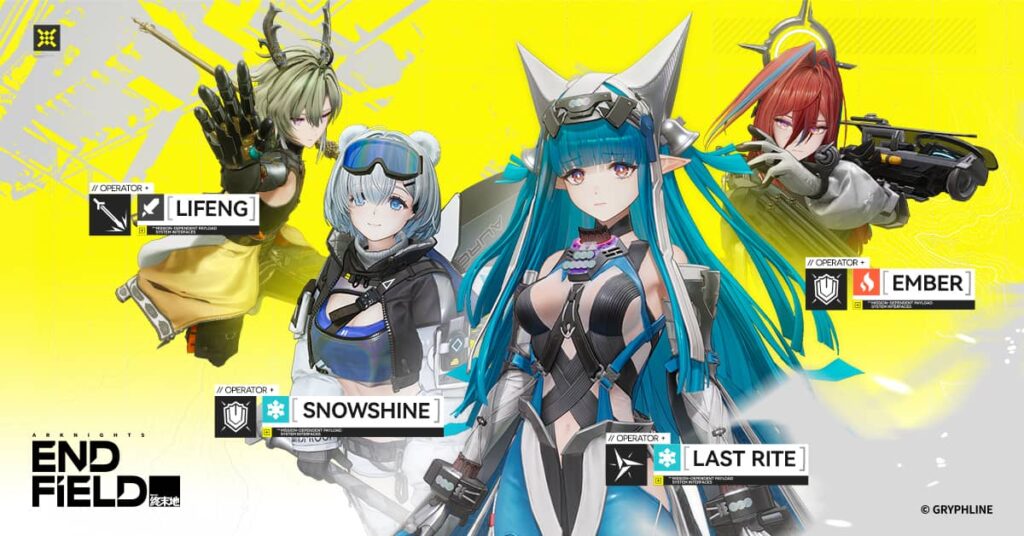
All four of your characters are present on the battlefield simultaneously. You control one directly. The other three operate on AI, handling basic attacks and cycling through abilities without manual input. When the situation calls for it, you switch — instantly, no cooldown, no transition screen.
This sounds like a small thing. It isn’t.
In most comparable games, the character you’re not controlling either disappears or becomes a passive buff source. Team composition becomes an abstract exercise in numbers and abilities. In Endfield, the whole squad is present, getting hit, generating resources, and occupying physical positions that affect what’s possible in real time. A tank holding the front line creates a different tactical reality than a healer who’s drifted to the wrong side of an enemy group.
The trade-off is that the AI is good but imperfect. In harder content, you’ll occasionally watch a well-built character make a bad decision. That frustration is actually a backhanded compliment — you only care about the AI’s decisions because those decisions have real consequences. In a shallower game, it wouldn’t matter.
The Stagger System: Where the Tactical Layer Lives
Everything in Endfield’s combat comes back to the stagger system. Every enemy has a stability gauge running alongside their health bar. Deplete it through attacks and specific skills, and the enemy enters a broken state — staggered, unable to act, and vulnerable to amplified damage. That window is your primary damage opportunity. Use it well, and you dismantle things that looked threatening. Miss it, and fights drag unnecessarily.
The depth comes from how the gauge responds to different inputs. Not every attack depletes stability equally. Some characters exist in a party primarily to break the gauge so someone else can deal damage inside the window. Some elements interact with stability in specific ways. Some enemy types are resistant to certain damage categories and vulnerable to others.
What this creates is a design where team composition isn’t about stacking the highest damage numbers — it’s about building a squad that can reliably open the broken state window against the content you’re facing. A team that can’t efficiently break stability on a specific boss will struggle regardless of raw power.
The problem is that the open world doesn’t push players toward this understanding early enough. Standard enemies can be cleared without engaging the stagger system meaningfully, so players who don’t experiment proactively arrive at harder content without the mental model the game requires. That’s a tutorialization failure worth being direct about.
Ability Architecture: Depth Without Clutter
Each character has basic attacks, active skills, and an ultimate — a clean structure that gets interesting through cross-party interactions rather than individual kit complexity.
Active skills are the primary tactical resource. The strongest effects usually require setup: a specific debuff already applied, an elemental reaction triggered, another ability having fired first. Playing a character in isolation produces decent results. Playing them as a coordinated piece in a sequence produces results that feel disproportionate to the inputs.
This is where Endfield rewards players who invest time understanding their roster. The difference between a mediocre team and an effective one isn’t primarily about individual character quality — it’s about whether abilities chain together in ways that generate momentum. Ultimates are powerful and infrequent enough that good deployment timing is genuinely impactful, particularly at higher difficulty levels.
The interface itself is clean and responsive. Skill queuing works reliably, character switching during active animations doesn’t cause missed inputs, and the visual language for elemental effects is readable once you’ve spent a few hours with the game.
Elemental Reactions: Meaningful Without Being Mandatory
Endfield’s elemental system provides real upside — additional damage, status conditions, debuffs that amplify subsequent hits — without making reaction optimization a prerequisite for basic effectiveness. That’s the right call.
In some comparable games, team composition is dictated almost entirely by reaction matrices. Endfield doesn’t go that far. Reactions are an optimization layer for players who want to engage precisely, not a wall blocking players who build around characters they find compelling. The ceiling is high enough to matter in endgame content without the floor being punishing in mid-game.
Boss Design: Where the System Proves Itself
The combat system’s quality is most legible in boss encounters, and Endfield’s bosses are generally well-designed. They’re built with specific mechanical asks — stability gauge vulnerabilities, positional requirements, attack patterns that punish certain party configurations — that make the stagger system feel purposeful rather than abstract.
The better bosses function as practical tests of the mechanics the story has been developing. They work because the system underneath them is deep enough to make the problem interesting. Where boss design occasionally falters is in arena geometry — some rooms don’t give enough space to position effectively, creating friction that feels arbitrary rather than intentional.
Endgame challenge content is where the system performs best. These encounters assume you understand everything, and they push stagger management, ability sequencing, and elemental reactions simultaneously. Playing this content with an optimized, well-understood team is the closest Endfield gets to fully delivering on its tactical RPG framing.
The Learning Curve Problem
Endfield has a real learning curve issue. The first eight to ten hours don’t adequately communicate how the combat system works at the level required for harder content. Tutorials explain mechanics accurately but don’t build the right mental model.
The stagger system specifically is taught as a mechanic to pursue but not as a design philosophy to understand. Players learn that breaking stability is beneficial without internalizing why team composition choices determine whether breaking stability is reliably achievable in the first place. The too-gentle open world difficulty means there’s no natural forcing function to close that gap.
This isn’t fatal — the system is good enough that players who engage with it find the investment worthwhile. But a more deliberately designed early game would produce a far better-prepared playerbase for the content that makes Endfield worth playing.
How It Compares
Against turn-based tactical games like Fire Emblem or Triangle Strategy, Endfield isn’t competing in the same design space. Those games are about board state management. Endfield is about real-time execution within a prepared tactical framework. Different skills, different satisfactions.
Against actual comparables — Genshin Impact, Honkai: Star Rail — Endfield’s combat is demonstrably deeper. The stagger system creates constraints that shape team-building in ways Genshin’s elemental reactions don’t match. Full four-character field presence adds positioning considerations that tab-in systems avoid. The ability interaction design rewards compositional thinking rather than just running the highest-rated characters.
Genshin’s combat is more accessible and has sustained mass engagement for years on the strength of content and characters. Endfield is betting that a meaningful audience wants the combat to actually be hard to master. Based on who’s engaging most enthusiastically with the game’s demanding content, that bet looks credible.
The Bottom Line
Arknights: Endfield delivers a combat system that earns its tactical descriptor. The stagger mechanic creates a genuine strategic layer. The ability interaction design rewards team-building investment. Boss encounters mostly leverage the system’s depth rather than papering over it with inflated health bars.
The gaps are real — the early game under-teaches the system, the open world doesn’t develop player understanding organically, and the AI will frustrate you at the wrong moment. None of these break the experience. They prevent a great combat system from being as well-understood as it deserves.
What Endfield has demonstrated is that a live-service action game can have combat worth taking seriously on its own terms. In a genre where combat systems are usually the least interesting part of the product, that matters more than it might seem.