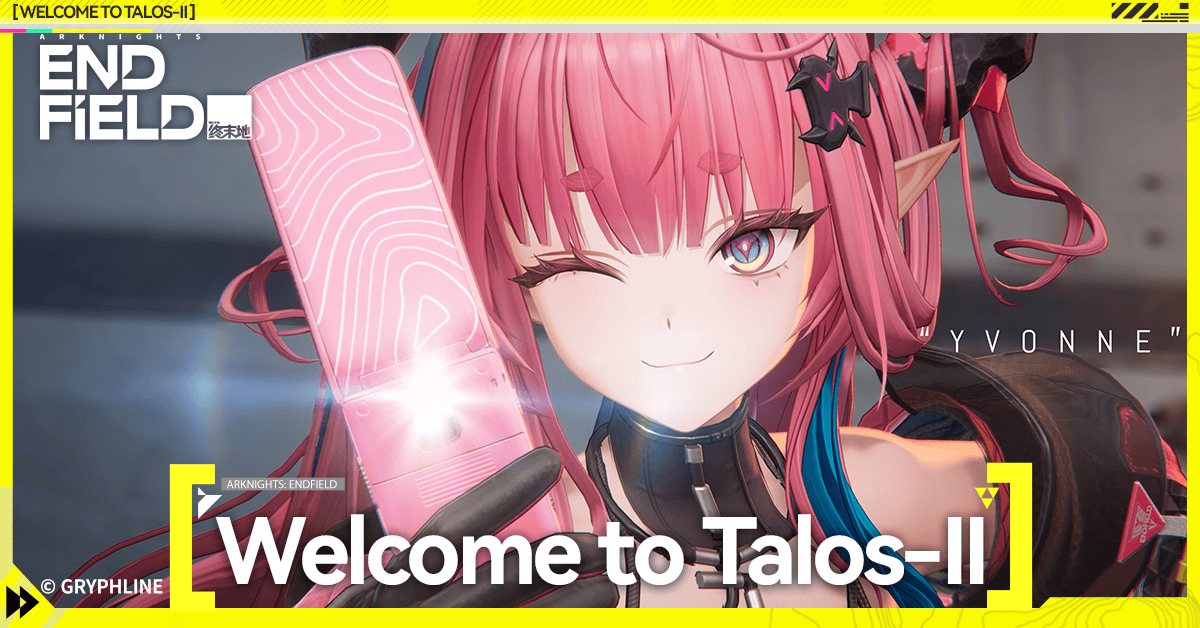
Arknights: Endfield dropped on January 22, 2026, and it landed exactly the way Hypergryph needed it to — not with polite applause, but with the kind of noise that forces the rest of the industry to pay attention. It cleared the top charts on PC storefronts across multiple regions in its first two weeks, and the discourse has been relentless ever since. Some of that is franchise momentum. Most of it is the game itself.
The question worth asking isn’t whether Endfield is good. It clearly is. The question is whether it’s actually doing something new with the tactical RPG formula, or whether it’s just a very expensive, very polished version of things we’ve already seen. After significant time with it, the answer is more interesting than a simple yes or no.
It Didn’t Have to Be This Good
The original Arknights was a mobile tower defense gacha game — not the most prestigious starting point for a franchise trying to make a serious case in the PC RPG space. Mobile-to-PC adaptations have a poor track record, tending to feel either underbaked for the platform or cynically reskinned without genuinely rethinking the design.
Hypergryph did neither. Endfield was built from scratch for PC and console, and it shows in ways that go beyond visuals. The control schemes, the scope of the environments, the depth of the factory systems — none of this reads as a mobile game awkwardly scaled up. It reads as a studio that understood its original game’s limitations and deliberately built something different.
The DNA of a gacha game is still present in how Endfield is structured, and that creates friction in places. But the ambition is real, and the execution is good enough that the friction rarely feels fatal.
Talos-II as a World That Earns Its Darkness
Talos-II isn’t just a backdrop — it’s a world with a specific, coherent tragedy baked into its geography. A frontier colony cut off from its home planet 150 years ago, forced to survive without the infrastructure that made settlement viable. The result is a civilization that has been improvising for generations, and it shows in everything from the architecture to the political dynamics the story puts you in the middle of.
What the narrative does well is resist making this feel like a standard post-apocalyptic setting. Talos-II wasn’t destroyed — it was abandoned and had to figure itself out. That’s a different emotional register, and the writing mostly honors it.
The main campaign runs 40 to 60 hours, and the pacing holds up better than most games of this length. The amnesiac protagonist is a cliché the genre never quite escapes, but the supporting cast is strong enough to carry those moments, and the political threads running through the main plot are genuinely interesting rather than decorative. The game doesn’t need to constantly remind you the stakes are high because the world itself communicates that.
Combat That Actually Has Teeth
On paper, the setup sounds familiar: four characters, real-time action, elemental reactions, ability rotations. If you’ve played Genshin Impact, you recognize the structural outline immediately. The execution is where things diverge.
Endfield’s combat is built around a stagger mechanic — enemies have a stability gauge that you break down through normal attacks and abilities, and cracking it opens a damage window you need to exploit quickly. It actively shapes how you approach every fight. If you’re running a team that can’t efficiently address a particular stability gauge, you feel it immediately.
The four-character party being present simultaneously rather than tagged in sounds like a small decision but has significant implications. You’re managing a battlefield, not a rotation list. Boss encounters specifically will expose poor team construction fast — you can’t out-execution a bad party composition past a certain difficulty threshold.
The critical limitation is that the open world difficulty curve is too gentle for too long. Players who aren’t pushed to engage with the stagger mechanics early sometimes arrive at harder content without having internalized the fundamentals. That’s a design miscalibration worth noting.
The Factory System Is the Wild Card
The Automated Industrial Complex — the AIC — is a production and resource management system you build and maintain in the game world. You extract raw materials, route them through processing chains, manage power distribution, and automate the production of gear upgrades. The comparison to Factorio or Satisfactory is not hyperbolic. The systems are real.
What makes this consequential is that it’s directly tied to character progression. Weapons, gear upgrades, enhancement materials — they come from your factories. A broken production chain has direct consequences for your combat capability. This is not a side activity with cosmetic rewards.
Players who love optimizing production systems will feel like Endfield was built for them. Players focused primarily on combat will find the AIC a persistent obligation. Prebuilt blueprints lower the floor, but you still need to integrate them into your network and manage terrain constraints. The game doesn’t let you ignore this layer entirely, which is a deliberate choice — and whether it’s the right one depends entirely on what you came for.
The offline production element functions differently than its mobile game equivalent because the output actually matters. Logging back in to find storage full of crafting materials isn’t a dopamine trick; it’s infrastructure you built paying dividends.
Gacha in a PC Context: The Honest Assessment
Endfield is a free-to-play gacha game, and there’s no useful version of this review that treats that as a footnote. The monetization model is structural, not cosmetic.
The pull system has a six-star guarantee at 80 pulls, a 50/50 mechanic on limited banners, and a secondary guarantee within the following 40 pulls if you lose the 50/50. Standard enough — but the 10 free pulls awarded after 30 pulls don’t count toward pity unless you hit 60 total, at which point they do. It’s technically explained in the interface and easy to misunderstand in ways that affect long-term resource planning.
Weapon acquisition is the fairer part of the system — you accumulate tokens through gameplay and exchange them for weapons rather than pulling on a separate banner. Weapon progression has a non-monetary ceiling reachable through sustained play, and that deserves genuine credit.
Whether the game is F2P sustainable long-term can’t be answered this early. Gacha games have a habit of being generous at launch and progressively less so. What the launch state suggests is that Hypergryph understands their audience well enough to avoid the most predatory patterns — but the long-term track record will matter more than launch generosity.
Where It Stands Against the Genre
Endfield is not a turn-based tactics game in the tradition of Fire Emblem or XCOM. The “tactical” in its genre classification refers to the depth of party-building and combat preparation, not grid-based positional strategy.
Within the action-tactical hybrid space, it’s the most mechanically ambitious live-service entry the genre has seen. Genshin Impact is lighter on combat depth. Honkai: Star Rail operates in a different register entirely. Endfield occupies a space that hasn’t really existed before — a game that takes live-service delivery seriously while building combat and progression systems credible enough for a premium, single-purchase title.
That combination is difficult to maintain over time. Whether Hypergryph resists the temptation to introduce power creep and content locks through the first year of updates will determine whether Endfield’s early promise becomes a lasting reputation or a cautionary tale.
Technical Performance: Real Numbers
On recommended hardware — an RTX 2060 or equivalent — the game holds a stable 60fps at medium-high settings in most situations. The minimum spec GTX 1060 is technically achievable but requires compromises that noticeably affect visual clarity. The launch build is meaningfully better optimized than beta versions, but older hardware will require time in the settings menu before the experience feels smooth.
Loading times are reasonable on SSDs and noticeably worse on HDDs — a platform reality rather than an Endfield-specific problem, but worth factoring in if you’re on spinning disk storage.
The Real Question
As a genre statement — this is what an ambitious, seriously designed action-tactical game looks like in 2026 — Endfield makes a credible case. The combat depth, the factory-building integration, and the quality of the world and writing all represent meaningful achievements.
As a live-service bet, the future is less certain. The systems are strong. The question is whether the business model will allow them to remain strong, or whether monetization pressure will gradually hollow out what makes the game worth engaging with.
What Endfield has done definitively is demonstrate that this kind of game is possible — a tactical RPG with genuine mechanical depth, delivered free-to-play on PC, with a world that takes its audience seriously. Whether it sustains is the question the next twelve months will answer. For now, it’s the most interesting game in its category. That’s worth something.